Abyssinia Journeys
ጥቅምት ፳፩ ፣ ፳፻፲፱Tikimt 21, 2019Tikimt 21 Enquire
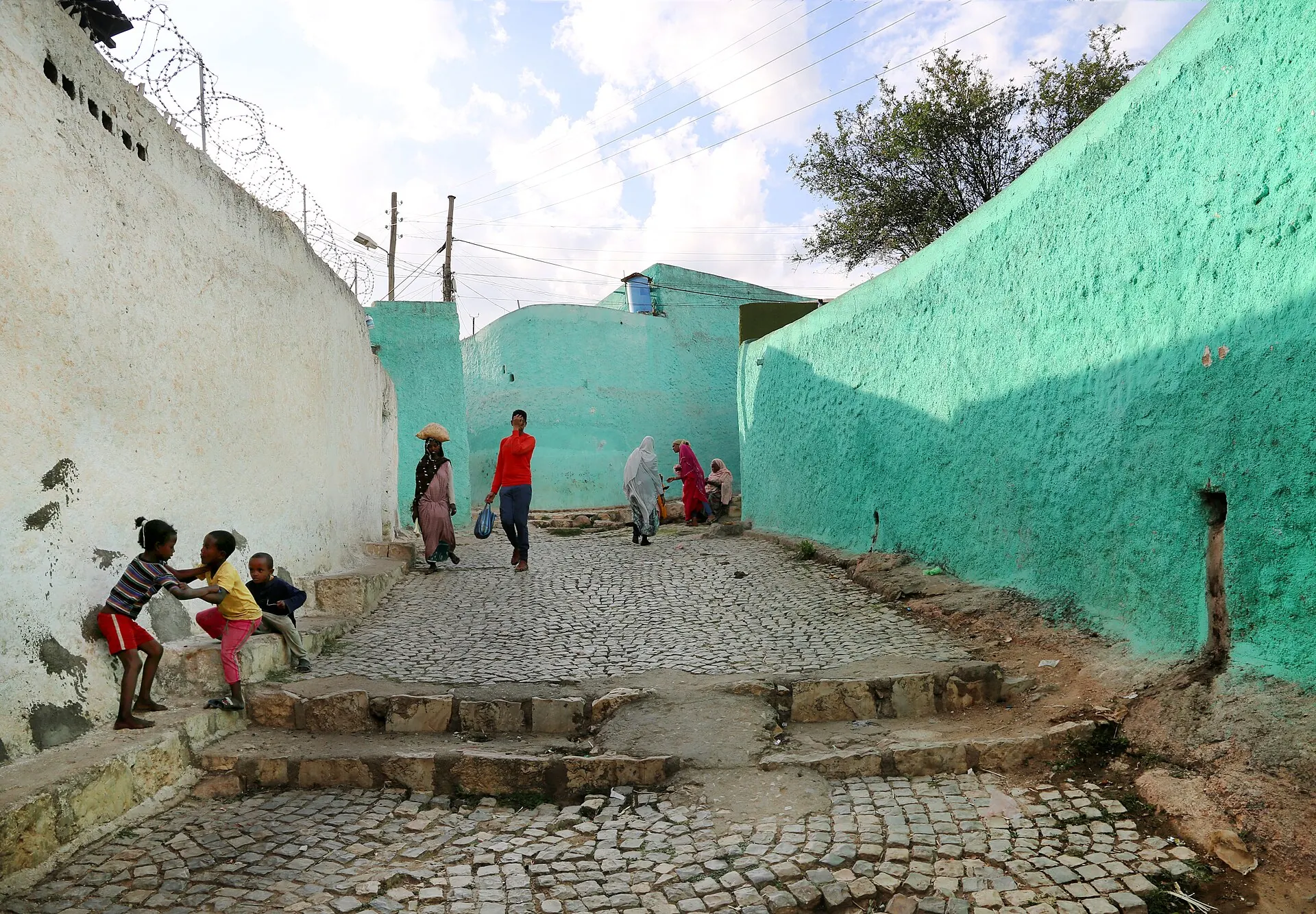
A cobbled lane between green and white walls in Harar's old town, children playing

Destination · Harari region · ሐረር

Harar

Altitude
1,885 m
Fly to
Dire Dawa, then 1 hour by road
Time needed
2 nights
Best months
October to February
Calendar
Ramadan, Eid, Mawlid
On sale

Harari region and Dire Dawa carry no regional warning. We fly to Dire Dawa rather than drive from Addis. Checked 26 October 2026 against UK and US government advice.

01 · The place

ሐረር

A walled Muslim city on a ridge in the east: five old gates, coloured lanes, coffee with salt, and hyenas called by name after dark.

Harar Jugol, the old walled town, is a UNESCO World Heritage Site and for centuries was a trading city between the highlands, the Somali coast and Arabia. Inside the sixteenth-century walls, the lanes are too narrow for cars and the houses are painted in greens and blues, their reception rooms hung with baskets and enamel plates.

It is also a place of Ethiopian coffee with its own character: Harar coffee is dried in the cherry and tastes of blueberries and spice, and locals drink it with salt or a little butter. We visit with a Harari guide and stay inside or close to the walls.

Jugol
The walled old town, a UNESCO World Heritage Site since 2006.
Five gates
The historic entrances, with a sixth added in the twentieth century.
After dark
The hyena men feed their animals outside the walls each evening.
02 · Harar

What we do here

Walking

The Jugol, gate to gate

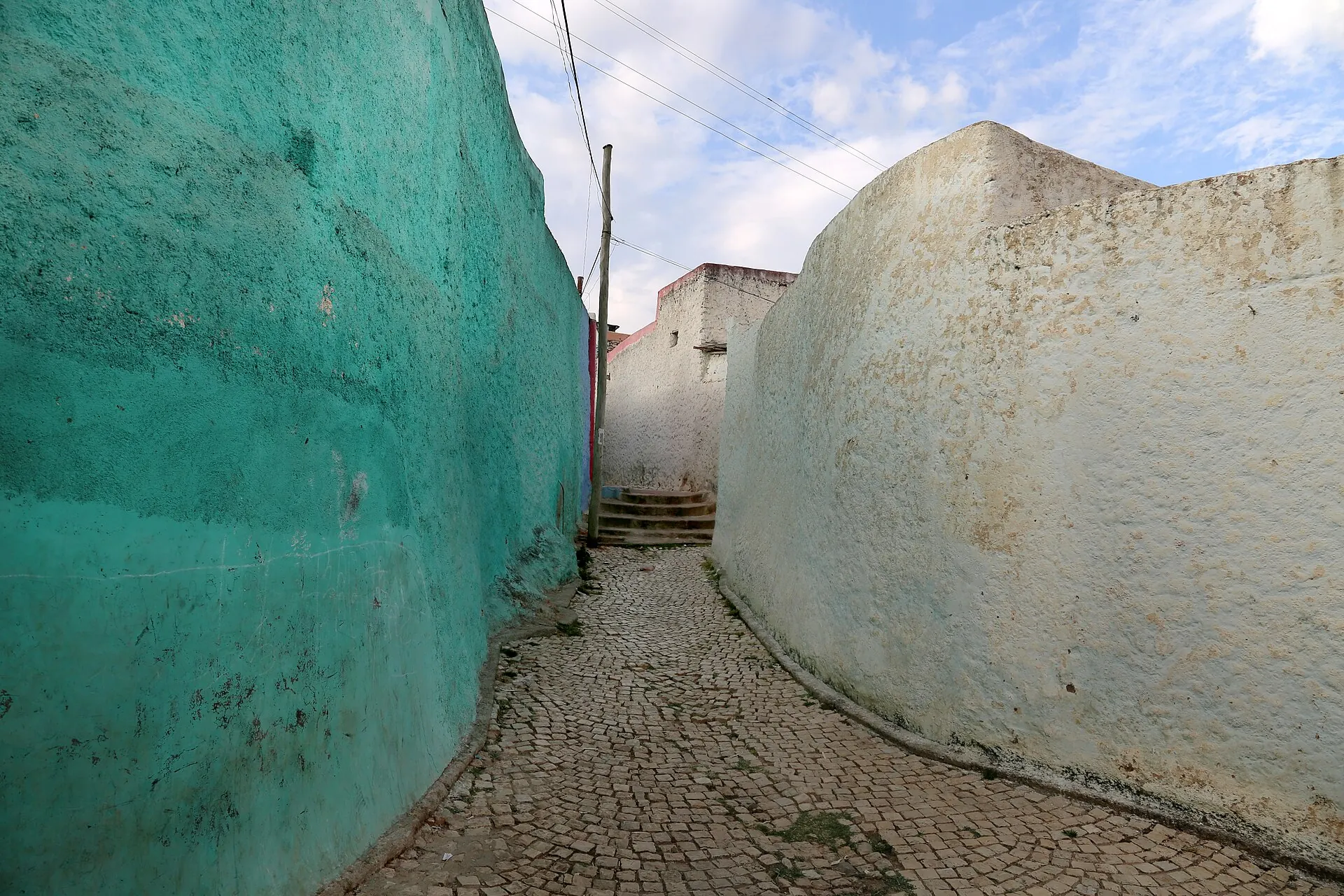
A narrow, curving lane between turquoise and white walls in old Harar

Enter by the Harar Gate, cross the old market square, and lose the map. A Harari guide takes you to the tomb of Emir Nur, the main mosque, the basket and spice markets, and the Shoa Gate market where farmers sell from blankets.

Evening

The hyena feeding

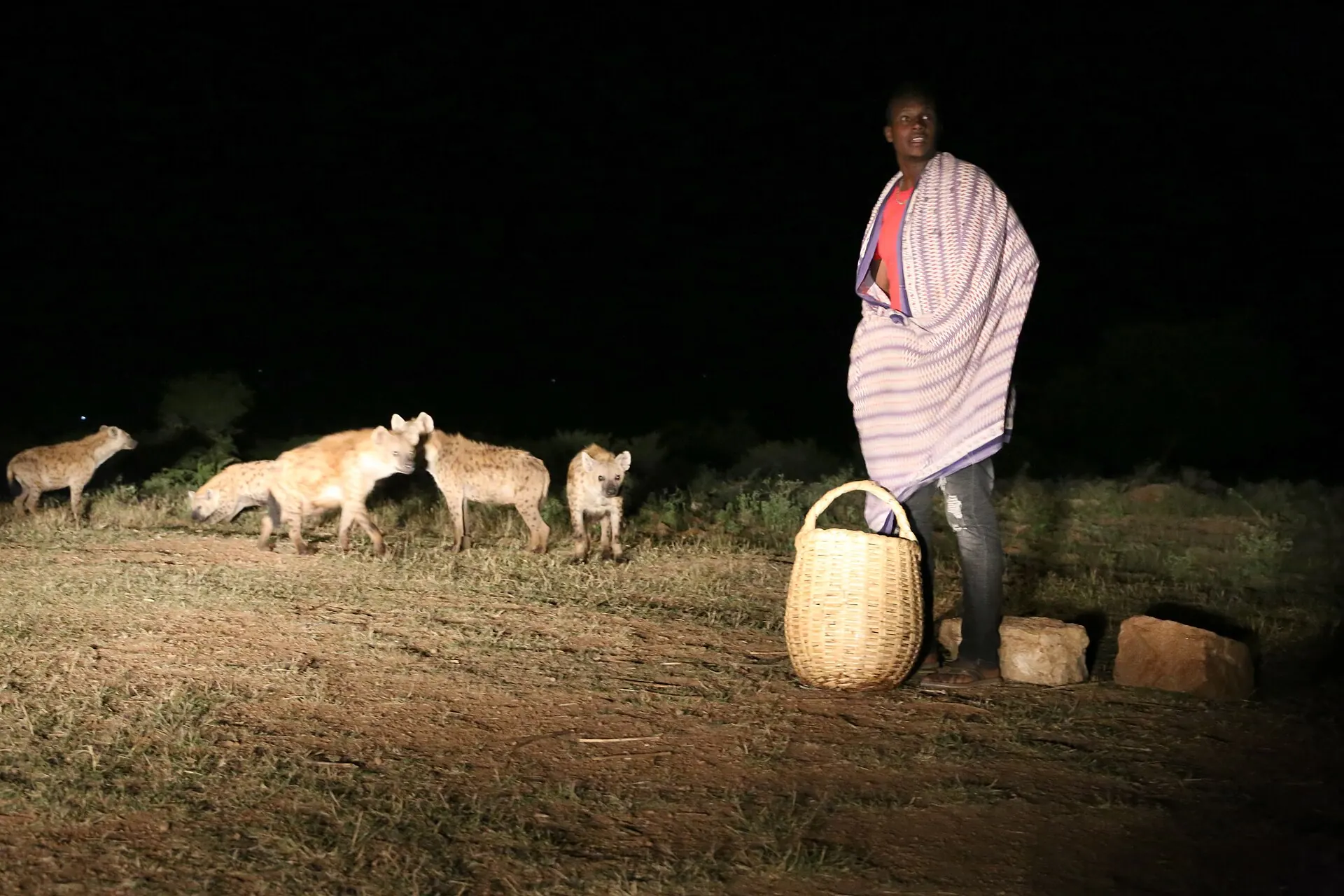
A hyena man stands with his basket as spotted hyenas gather at night outside Harar's walls

The tradition of feeding spotted hyenas at the edge of town is generations old. It is short, close and stays with you for a long time. Your guide stands with you; you can feed them from a stick if you want, or simply watch.

Houses

A Harari house, from the inside

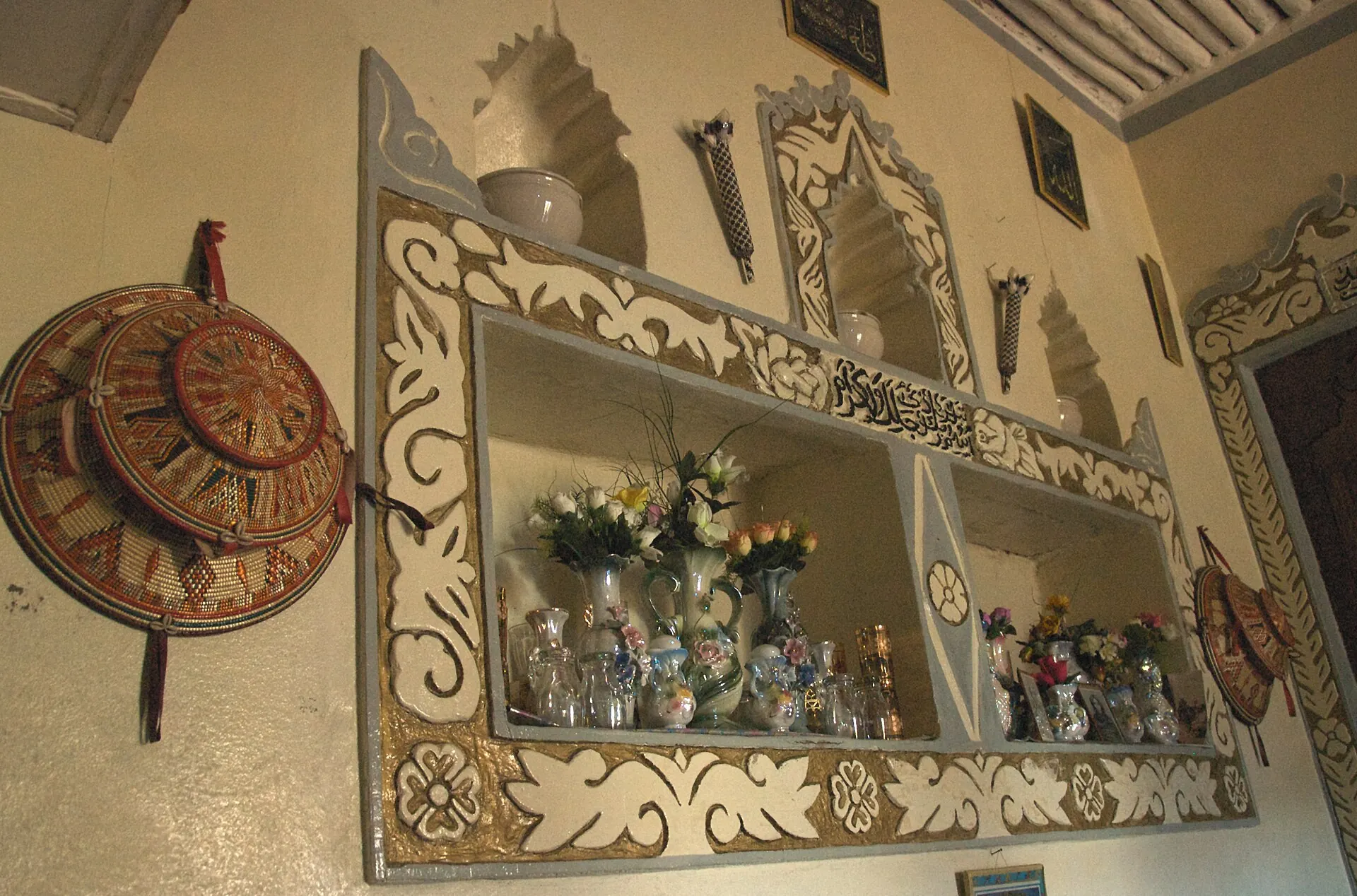
Carved niches, baskets and enamel plates on the wall of a traditional Harari home

Raised platforms, carved niches and walls of woven baskets and plates: the Harari house (gegar) is its own architecture. We visit a family home and the house museum that bears the name of the poet Arthur Rimbaud, who traded here in the 1880s.

Coffee

Coffee the Harar way

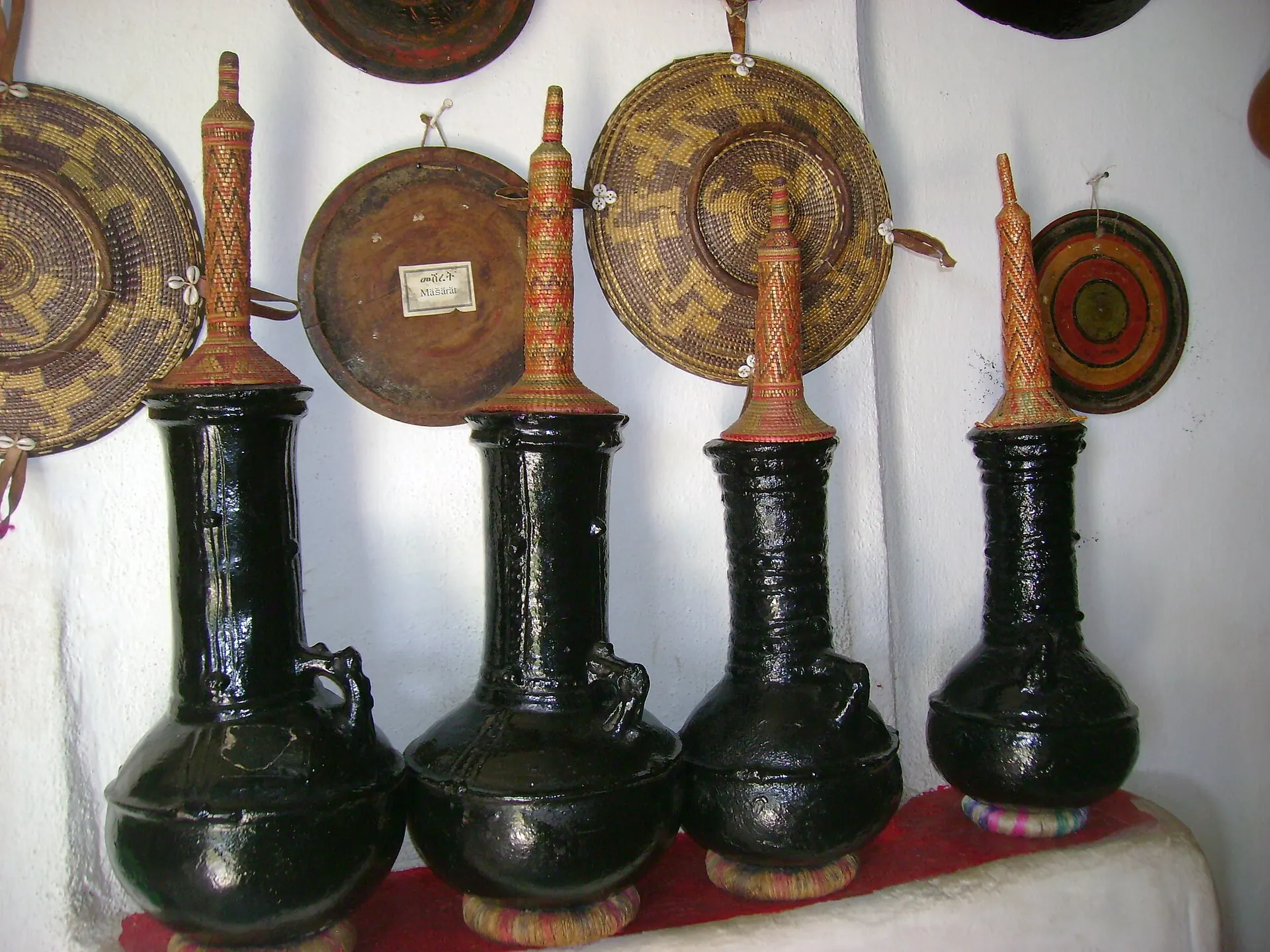
Black clay coffee pots and woven Harari baskets displayed on a white wall in Harar

Dry-processed Harar coffee has fed the coffee houses of the Red Sea for centuries. Drink a cup with salt, try qishr (spiced coffee-husk tea), and visit the coffee sellers by the market.

03 · When to go

Month by month, by the Ethiopian calendar

Read across the thirteen months. For exact dates and festivals during your trip, use the calendar converter.

መስከረምMeskerem
Good
ጥቅምትTikimt
Best
ኅዳርHidar
Best
ታኅሣሥTahsas
Best
ጥርTir
Best
የካቲትYekatit
Best
መጋቢትMegabit
Good
ሚያዝያMiyazya
Rains · hot
ግንቦትGinbot
Good
ሰኔSene
Good
ሐምሌHamle
Good
ነሐሴNehase
Good
ጳጉሜንPagume
Good
BestGoodRains: possible, but harder

04 · Getting there

Getting there, and the advice

We fly Addis Ababa to Dire Dawa (about an hour) and drive the last 55 km up to Harar. We do not drive from Addis: the road crosses East Shewa and West Hararghe, and the flight is quicker and better.

During Ramadan the old town is quiet by day and comes alive after sunset. The two Eids are joyful but busy; the calendar shows estimated dates, which follow the moon.

Open the full map
Map of Ethiopia showing where we go and where travel is advised against Zones under UK FCDO advice against all travel are red with white hatching: all of Tigray, Amhara and Gambela, the Wollega zones of Oromia, Metekel, northern Afar and southern Somali region. Zones under advice against all but essential travel are ochre. Our journeys run only through the green zones: Addis Ababa, Harar and Dire Dawa, Bale, Jimma and Kaffa, Sidama and the south. Afder: Advised against all travelAgnuak: Advised against all travelAlaba: No regional warning beyond nationwide adviceArsi: No regional warning beyond nationwide adviceAsosa: Advised against all but essential travelAwi/Agew: Advised against all travelBale: No regional warning beyond nationwide adviceBasketo: No regional warning beyond nationwide adviceBench Maji: Advice covers part of this zoneBorena: Advice covers part of this zoneCentral: Advised against all travelDawro: No regional warning beyond nationwide adviceDire Dawa: No regional warning beyond nationwide adviceDoolo: Advice covers part of this zoneEast Gojam: Advised against all travelEast Harerge: No regional warning beyond nationwide adviceEast Shewa: Advised against all but essential travelEast Wellega: Advised against all travelEastern: Advised against all travelFafan: Advice covers part of this zoneGamo Gofa: No regional warning beyond nationwide adviceGedio: No regional warning beyond nationwide adviceGuji: Advised against all but essential travelGurage: No regional warning beyond nationwide adviceHadiya: No regional warning beyond nationwide adviceHareri: No regional warning beyond nationwide adviceHoro Guduru: Advised against all travelIlubabor: No regional warning beyond nationwide adviceJarar: Advised against all but essential travelJimma: No regional warning beyond nationwide adviceKeffa: No regional warning beyond nationwide adviceKelem Wellega: Advised against all travelKemashi: Advised against all but essential travelKonta: No regional warning beyond nationwide adviceKorahe: Advice covers part of this zoneKT: No regional warning beyond nationwide adviceLiben: Advised against all travelMajang: Advised against all travelMetekel: Advised against all travelNogob: Advised against all but essential travelNorth Gonder: Advised against all travelNorth Shewa: Advised against all travelNorth Shewa: Advised against all travelNorth Western: Advised against all travelNorth Wollo: Advised against all travelNuer: Advised against all travelOromia: Advised against all travelRegion 14: No regional warning beyond nationwide adviceSegen Peoples': No regional warning beyond nationwide adviceSelti: No regional warning beyond nationwide adviceShabelle: Advice covers part of this zoneSheka: No regional warning beyond nationwide adviceSidama: No regional warning beyond nationwide adviceSiti: Advised against all but essential travelSouth Gonder: Advised against all travelSouth Omo: Advice covers part of this zoneSouth West Shewa: No regional warning beyond nationwide adviceSouth Wollo: Advised against all travelSouthern: Advised against all travelSpecial Woreda: Advised against all travelWag Himra: Advised against all travelWest Arsi: No regional warning beyond nationwide adviceWest Gojam: Advised against all travelWest Harerge: No regional warning beyond nationwide adviceWest Shewa: Advice covers part of this zoneWest Wellega: Advised against all travelWestern: Advised against all travelWolayita: No regional warning beyond nationwide adviceYem: No regional warning beyond nationwide adviceZone 1: Advised against all but essential travelZone 2: Advised against all travelZone 3: Advised against all but essential travelZone 4: Advice covers part of this zoneZone 5: Advised against all but essential travel

Shaded by the UK FCDO zone list. Red: advised against all travel. Ochre: essential travel only.

05 · Sample journeys

Journeys that include Harar

Before you write

Before you go

What should we wear in Harar?

It is a conservative Muslim town. Shoulders and knees covered for everyone; a scarf for women entering religious sites.

Can we photograph people?

Ask first, every time. Some people say no, some ask for a small fee; your guide will tell you what is usual. We do not photograph khat chewers or anyone praying.

Is khat legal?

It is legal in Ethiopia and sold openly around Harar, but it is illegal to take it out of the country, and luggage is searched at Bole.